

In the world of Valencian paella, rice is king, but the socarrat is emperor. That thin layer of caramelized, crispy rice clinging to the bottom of the paella pan is the most coveted bite for any diner. For many, a paella without socarrat is incomplete.
However, achieving it is the line that separates an amateur cook from a master of rice. It is a game of balance, hearing, and smell. Today we reveal the exact technique to achieve a crispy, tasty socarrat that, most importantly, does not taste burnt.
1. What exactly is socarrat?
Socarrat is not burnt rice (that would be "cremat," and it makes the whole paella bitter). Socarrat is the result of the Maillard reaction taken to the limit. When the broth has completely evaporated, the fat remaining at the bottom of the paella pan literally begins to fry the bottom layer of rice and the caramelized sugars from the broth.
The result is a golden, crispy crust full of the concentrated flavor of the entire stew. To achieve it, you need three things: the right pan, the correct proportion of fat, and absolute control of the heat.
2. The equipment: Polished steel, your best ally
Not all paella pans are created equal when it comes to making socarrat. Non-stick pans are designed precisely to prevent food from sticking, so achieving socarrat in them is almost impossible.
The ideal material is polished steel (the traditional Valencian paella pan). Polished steel transmits heat very quickly and directly, and its slightly porous surface allows the rice starch to adhere and toast. Enameled steel paella pans also work well, but polished steel remains the undisputed king for this technique.
3. The oil ratio: The vehicle of socarrat
Without fat, there is no frying; without frying, there is no socarrat. If your paella has very little oil, the rice will simply dry out and burn, acquiring a bitter charcoal flavor.
The oil you added at the beginning for the sofrito is crucial. A good starting point is to calculate approximately 20-25 ml of Extra Virgin Olive Oil (EVOO) for every 100 grams of rice.
4. The critical moment: Hearing and smell
The socarrat technique is executed in the last 2-3 minutes of cooking. This is where you must stop looking and start listening and smelling.
For most of the cooking time, the broth is boiling with a deep, steady "blub-blub" sound. But as the water evaporates, the sound changes. Suddenly, you will start to hear a crackling, high-pitched sizzle ("tsss-tsss"). That is the sound of the oil frying the rice. The water is gone, the socarrat has begun.
At that exact moment, turn up the heat slightly for 1 or 2 minutes. You will start to notice a sweet toasted smell, of caramel and fried rice. The moment that smell becomes a little more pungent, just before it smells like smoke, turn off the heat immediately.
5. The resting and spoon trick
Socarrat needs to settle. Once the heat is off, let the paella rest for 5 minutes. The residual moisture will finish cooking the top grains and the bottom crust will harden and slightly detach from the steel.
Master's trick: Very gently scrape the bottom of the paella pan on one side with a soup spoon. If you feel resistance and hear a scraping sound, the socarrat is forming. If the spoon slides smoothly, there is still water. If you scrape and it comes out black, you are too late.
Mastering socarrat requires practice and a lot of attention. But when you achieve it, the sound of the spoon scraping the bottom of the paella pan at the table will be the best music for your ears.
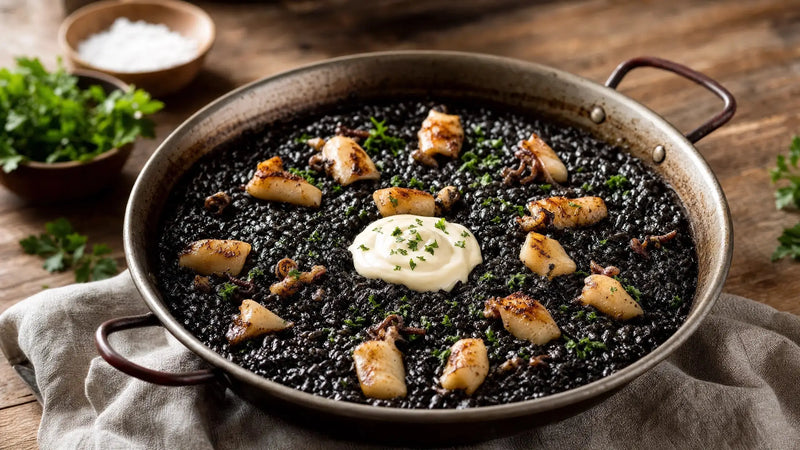
The polished steel paella pan is the essential tool for perfect socarrat.
View polished steel paella pans →